WOMEN'S CIRCLE • SPRING EQUINOX
(All people born into a female body are welcome here, not only those who identify as women.)
As the earth reaches the point of perfect balance between dark and light, the Spring Equinox marks the second of the three fertility festivals: the seeds we set at Imbolc are stirring now, pushing up through the soil and asking to be tended in the open air.
Day and night stand equal for this one moment, before the light begins to win. This is a season of momentum, of things once quiet becoming visible, of stepping more fully into what we've been quietly building since Imbolc.
Women have gathered in circle for longer than we haven't. Long before circles needed a reason, or a hashtag, or an explanation: this was simply how we moved through change together. We are not doing anything new here. We are remembering something old.
Together we'll slow down, settle our nervous systems, reflect on what is emerging within us, and gather in the healing medicine of circle.
You are welcome exactly as you are.
WHAT TO EXPECT
A warm, safe, intentionally held space of honesty, reflection and connection.
Together we'll share:
Grounding and nervous system settling
Seasonal ritual and reflection
Journalling
Gentle meditation
Sharing and deep listening
Education around cyclical and seasonal living
We'll finish with a shared meal together.
SHARED AGREEMENTS
To help create a safe and supportive space, we ask everyone to agree to the following (this will be reiterated at the start of circle with more explanation and guidance):
Listen to understand, not to respond.
We do not fix, advise or interrupt.
Honour all emotions and experiences.
Let go of judgement, of yourself and others.
Phones away and off.
Start time is firm. No entry after circle begins.
Confidentiality is essential. Stories shared in circle stay in circle.
Take care of your own needs. Participation is always an invitation, never an expectation.
There is no perfect way to show up. Bring your whole self.
DETAILS
Arrival from 5:00pm
Circle begins 5:30pm sharp
Circle closes around 8:30pm(ish), followed by a shared dinner.
PLEASE BRING
A plate of food to share
Journal and pen
Comfortable clothing you can move in as the weather warms
Have a think about what in your life needs tending now, in the open air
Come exactly as you are.
FINANCIAL INVESTMENT
It is important to me that this work is both valued and accessible.
There are two options. Please choose your payment point with honesty and integrity, in a way that reflects both your current capacity and the value of this space.
If you are financially resourced, I invite you to pay it forward. Your contribution helps make this work accessible to women who may otherwise not be able to attend.
First Nations mob are always welcome and do not have to pay.
No one will be turned away due to lack of funds. If cost is a barrier, please reach out.
At the same time, I ask that you approach this with personal responsibility.
Your financial investment is part of YOUR energetic investment.
Consider what you are willing to receive, and meet this space with that same level of intention.
From Winter Solstice 2026, prices have increased to reflect the continued education, development, and investment into this work and the space that holds it.
Thank you for valuing this space, and your place within it.
THE ORIGIN OF OSTARA
The name Ostara comes to us from a single, fragile historical thread. In the 8th century, the English monk Bede recorded that the Anglo-Saxons named a spring month Eosturmonath after a goddess, Eostre, of whom almost nothing else survives in the historical record. Centuries later, the German scholar Jacob Grimm picked up this thread and reconstructed a Germanic goddess he called Ostara, linking her to the symbols we now associate with this time — eggs, hares, new light, fertility.
Modern pagans revived and popularised Ostara as a name for the Spring Equinox in the 20th century, as part of the Wheel of the Year. It's worth holding this honestly: Ostara as we celebrate her today is as much a modern reconstruction as an unbroken ancient tradition. But the instinct underneath her — to mark this precise tip toward the light with reverence — is old, and it is real, and it is ours to keep tending, wherever her name came from.
For those of us on this side of the planet, there's a quiet gift in the season lining up as it should. The Wheel of the Year was mapped in the Northern Hemisphere, where Ostara falls in March. Here, on Kaurna Yerta, our Spring Equinox lands in September — in sync with the actual season stirring outside our door, not borrowed from someone else's hemisphere.
ON KAURNA YERTA
We gather on unceded Kaurna Country, at the point where Kudlila is giving way to Wirltuti.
Kudlila — the season of kudlinthi, to wash the earth — is the wet, windswept months that carry us through winter. It is closing now. Wirltuti, the mild, warming season, is beginning to take its place, heralded in Kaurna knowledge by the rising of Wirltu — the eagle — in the position we know as the Southern Cross. The warm northwest wind, pukarra, starts to move through. Wattle gum is gathered and worked. People begin moving toward the foothills as the earth softens and opens.
We honour the wisdom of this land, its seasons, and the First Peoples who have read and cared for them for tens of thousands of years — long before any wheel, any goddess, any name we've given it.
WOMEN'S CIRCLE • SPRING EQUINOX
(All people born into a female body are welcome here, not only those who identify as women.)
As the earth reaches the point of perfect balance between dark and light, the Spring Equinox marks the second of the three fertility festivals: the seeds we set at Imbolc are stirring now, pushing up through the soil and asking to be tended in the open air.
Day and night stand equal for this one moment, before the light begins to win. This is a season of momentum, of things once quiet becoming visible, of stepping more fully into what we've been quietly building since Imbolc.
Women have gathered in circle for longer than we haven't. Long before circles needed a reason, or a hashtag, or an explanation: this was simply how we moved through change together. We are not doing anything new here. We are remembering something old.
Together we'll slow down, settle our nervous systems, reflect on what is emerging within us, and gather in the healing medicine of circle.
You are welcome exactly as you are.
WHAT TO EXPECT
A warm, safe, intentionally held space of honesty, reflection and connection.
Together we'll share:
Grounding and nervous system settling
Seasonal ritual and reflection
Journalling
Gentle meditation
Sharing and deep listening
Education around cyclical and seasonal living
We'll finish with a shared meal together.
SHARED AGREEMENTS
To help create a safe and supportive space, we ask everyone to agree to the following (this will be reiterated at the start of circle with more explanation and guidance):
Listen to understand, not to respond.
We do not fix, advise or interrupt.
Honour all emotions and experiences.
Let go of judgement, of yourself and others.
Phones away and off.
Start time is firm. No entry after circle begins.
Confidentiality is essential. Stories shared in circle stay in circle.
Take care of your own needs. Participation is always an invitation, never an expectation.
There is no perfect way to show up. Bring your whole self.
DETAILS
Arrival from 5:00pm
Circle begins 5:30pm sharp
Circle closes around 8:30pm(ish), followed by a shared dinner.
PLEASE BRING
A plate of food to share
Journal and pen
Comfortable clothing you can move in as the weather warms
Have a think about what in your life needs tending now, in the open air
Come exactly as you are.
FINANCIAL INVESTMENT
It is important to me that this work is both valued and accessible.
There are two options. Please choose your payment point with honesty and integrity, in a way that reflects both your current capacity and the value of this space.
If you are financially resourced, I invite you to pay it forward. Your contribution helps make this work accessible to women who may otherwise not be able to attend.
First Nations mob are always welcome and do not have to pay.
No one will be turned away due to lack of funds. If cost is a barrier, please reach out.
At the same time, I ask that you approach this with personal responsibility.
Your financial investment is part of YOUR energetic investment.
Consider what you are willing to receive, and meet this space with that same level of intention.
From Winter Solstice 2026, prices have increased to reflect the continued education, development, and investment into this work and the space that holds it.
Thank you for valuing this space, and your place within it.
THE ORIGIN OF OSTARA
The name Ostara comes to us from a single, fragile historical thread. In the 8th century, the English monk Bede recorded that the Anglo-Saxons named a spring month Eosturmonath after a goddess, Eostre, of whom almost nothing else survives in the historical record. Centuries later, the German scholar Jacob Grimm picked up this thread and reconstructed a Germanic goddess he called Ostara, linking her to the symbols we now associate with this time — eggs, hares, new light, fertility.
Modern pagans revived and popularised Ostara as a name for the Spring Equinox in the 20th century, as part of the Wheel of the Year. It's worth holding this honestly: Ostara as we celebrate her today is as much a modern reconstruction as an unbroken ancient tradition. But the instinct underneath her — to mark this precise tip toward the light with reverence — is old, and it is real, and it is ours to keep tending, wherever her name came from.
For those of us on this side of the planet, there's a quiet gift in the season lining up as it should. The Wheel of the Year was mapped in the Northern Hemisphere, where Ostara falls in March. Here, on Kaurna Yerta, our Spring Equinox lands in September — in sync with the actual season stirring outside our door, not borrowed from someone else's hemisphere.
ON KAURNA YERTA
We gather on unceded Kaurna Country, at the point where Kudlila is giving way to Wirltuti.
Kudlila — the season of kudlinthi, to wash the earth — is the wet, windswept months that carry us through winter. It is closing now. Wirltuti, the mild, warming season, is beginning to take its place, heralded in Kaurna knowledge by the rising of Wirltu — the eagle — in the position we know as the Southern Cross. The warm northwest wind, pukarra, starts to move through. Wattle gum is gathered and worked. People begin moving toward the foothills as the earth softens and opens.
We honour the wisdom of this land, its seasons, and the First Peoples who have read and cared for them for tens of thousands of years — long before any wheel, any goddess, any name we've given it.
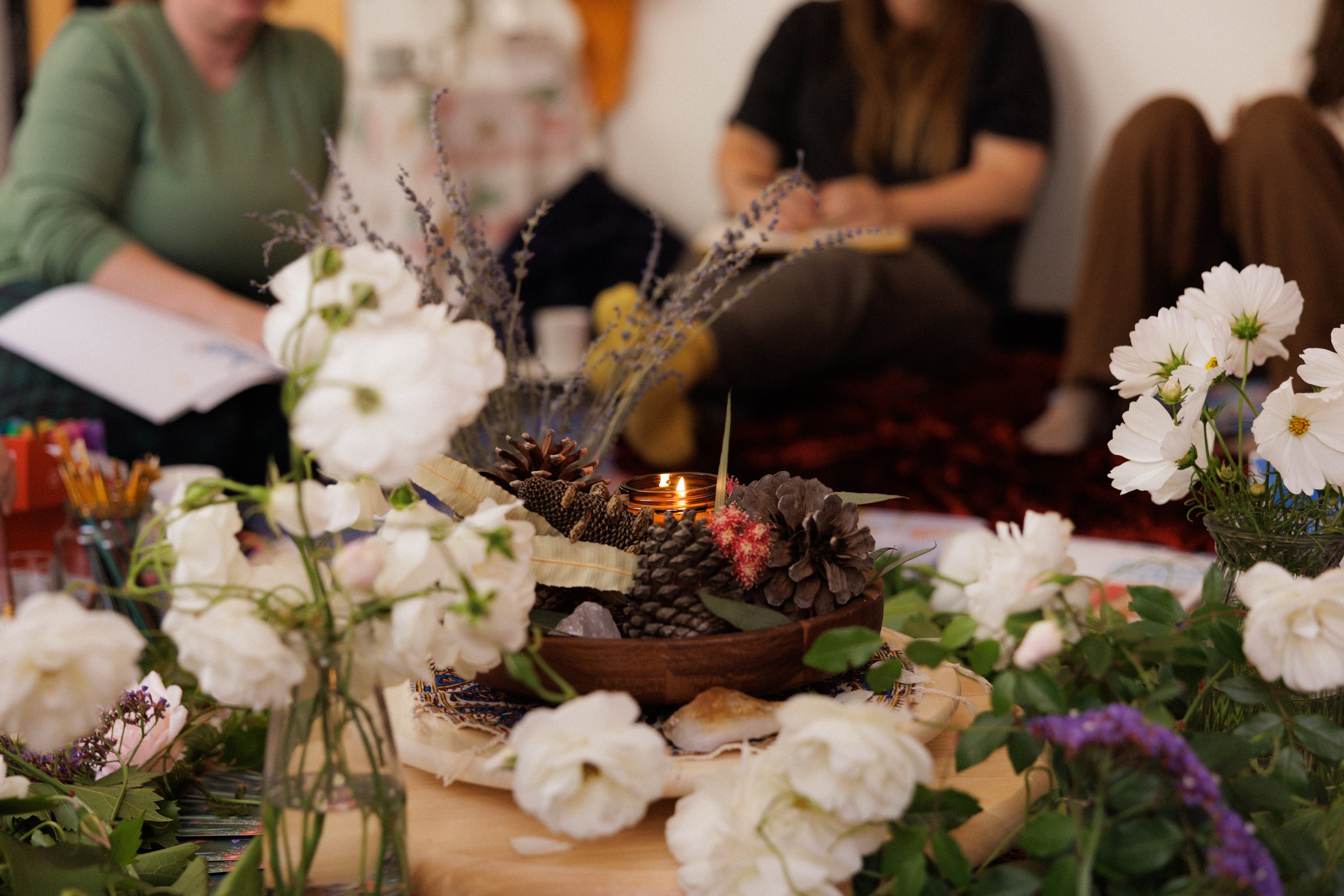 Image 1 of 9
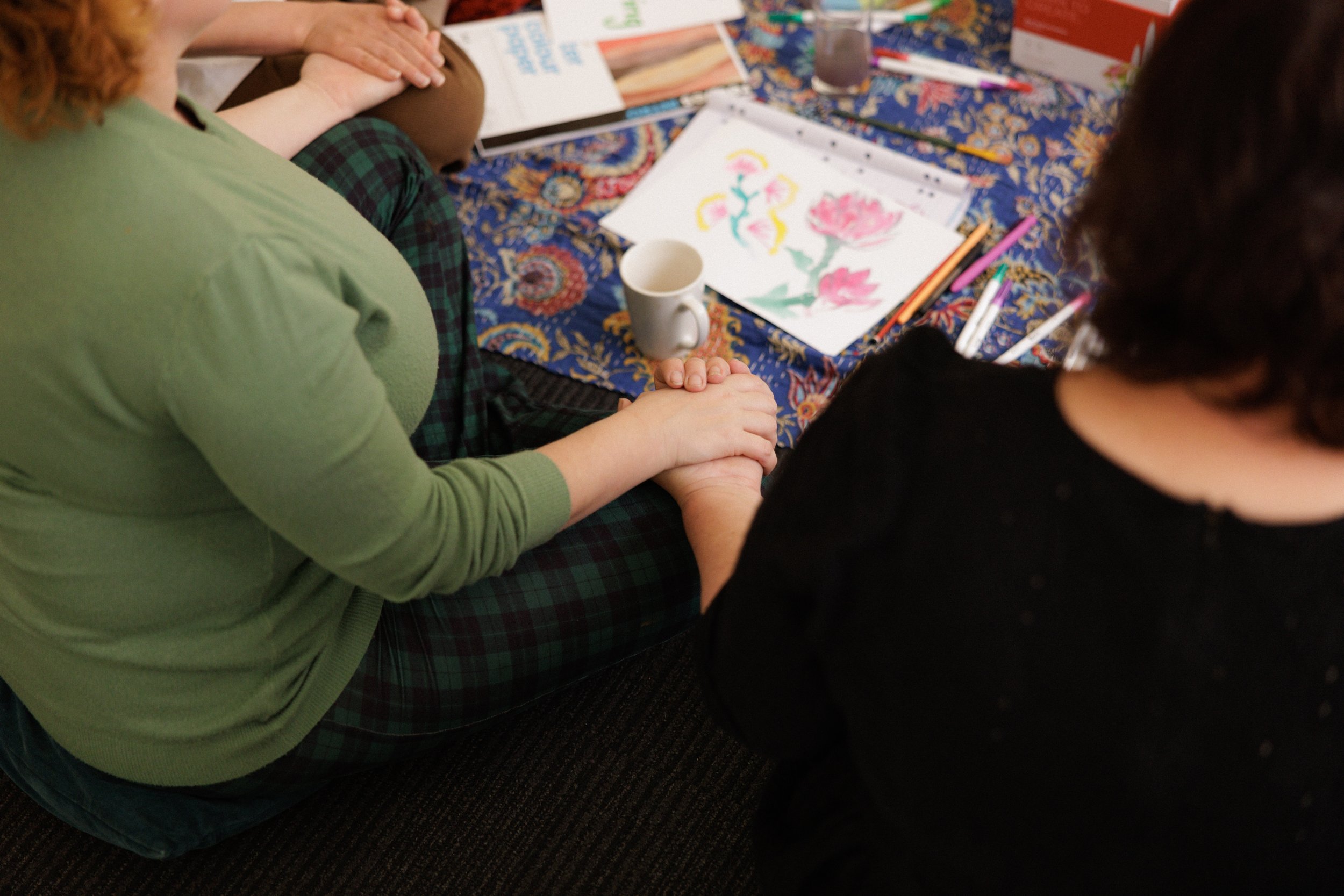 Image 2 of 9
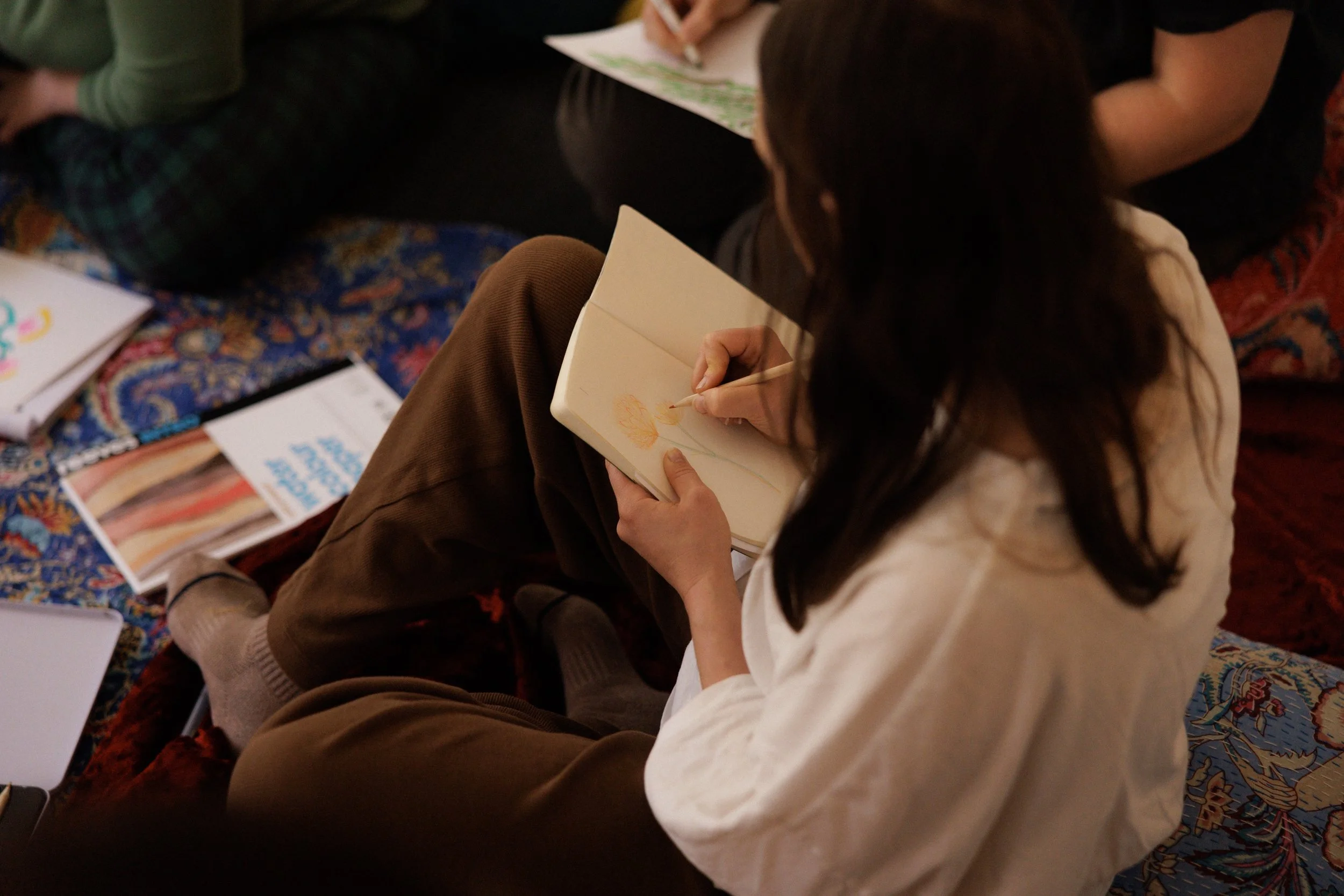 Image 3 of 9
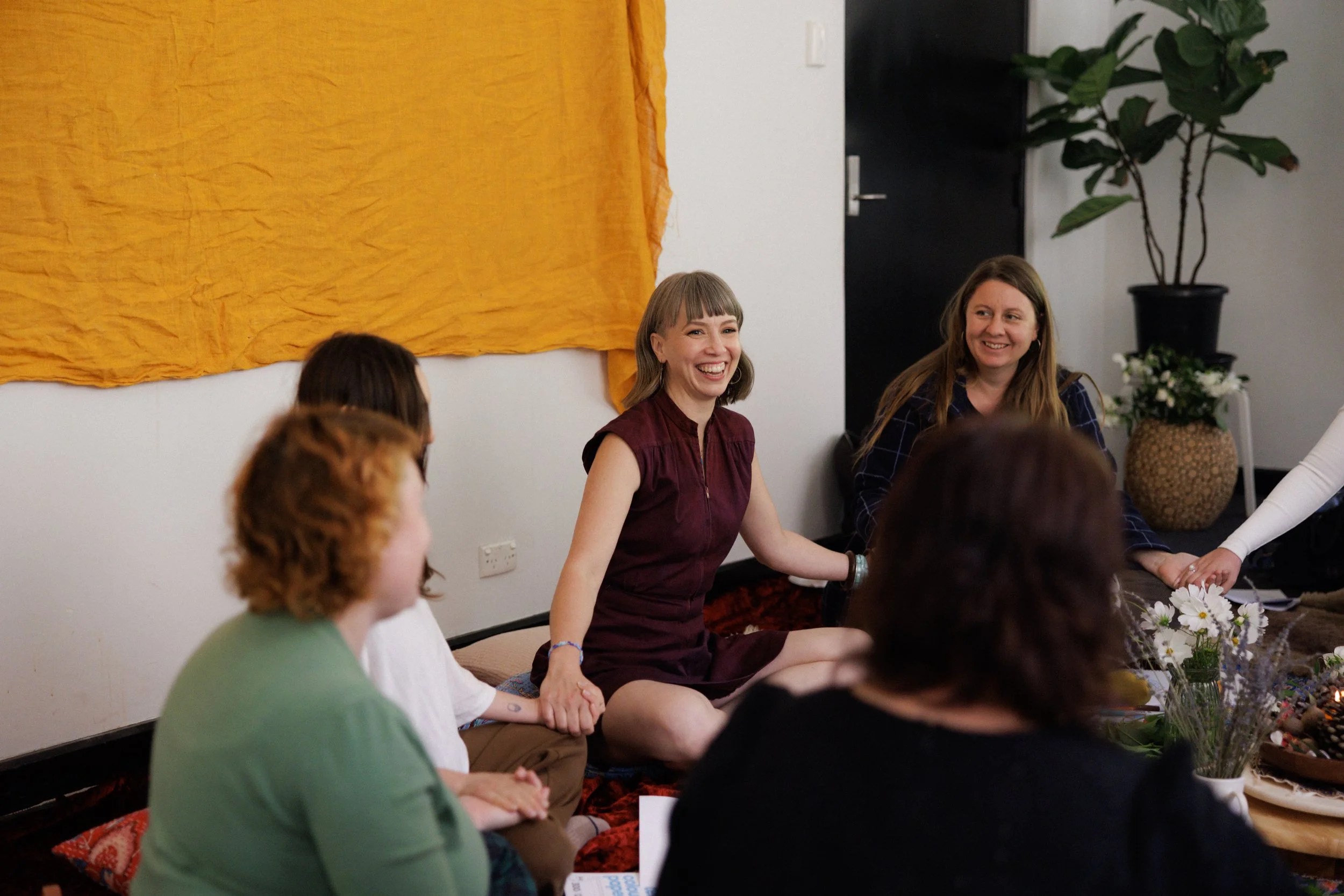 Image 4 of 9
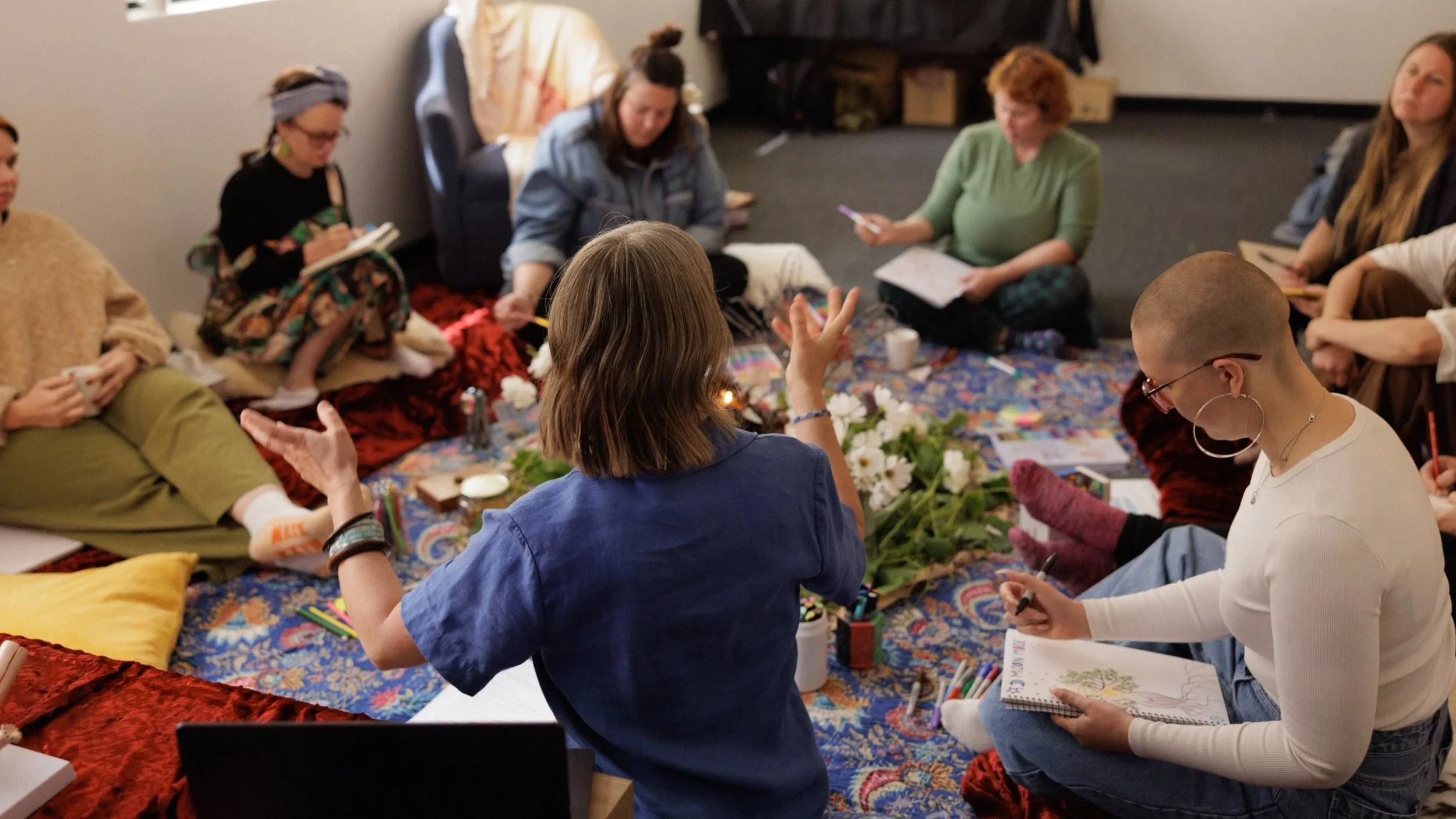 Image 5 of 9
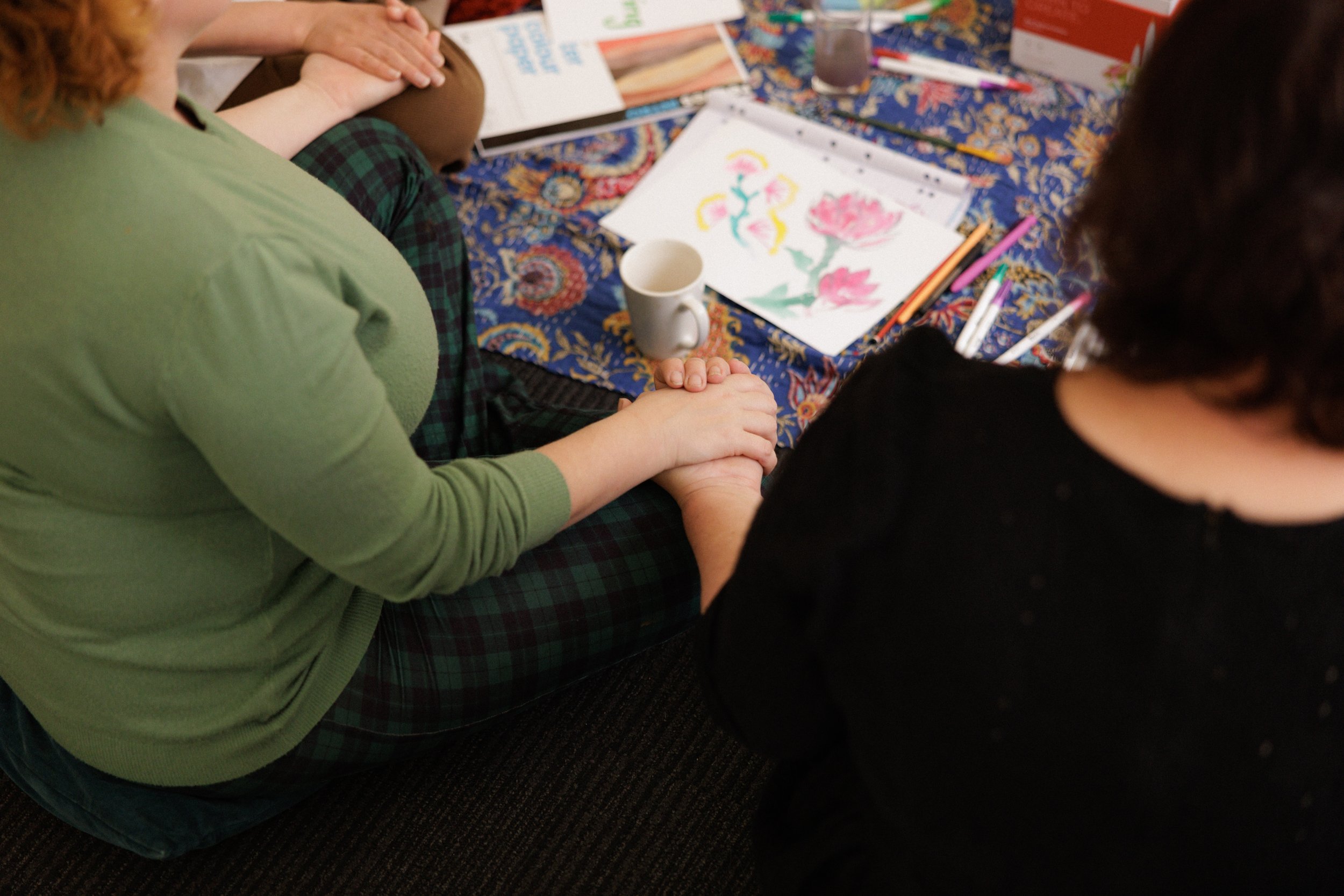 Image 6 of 9
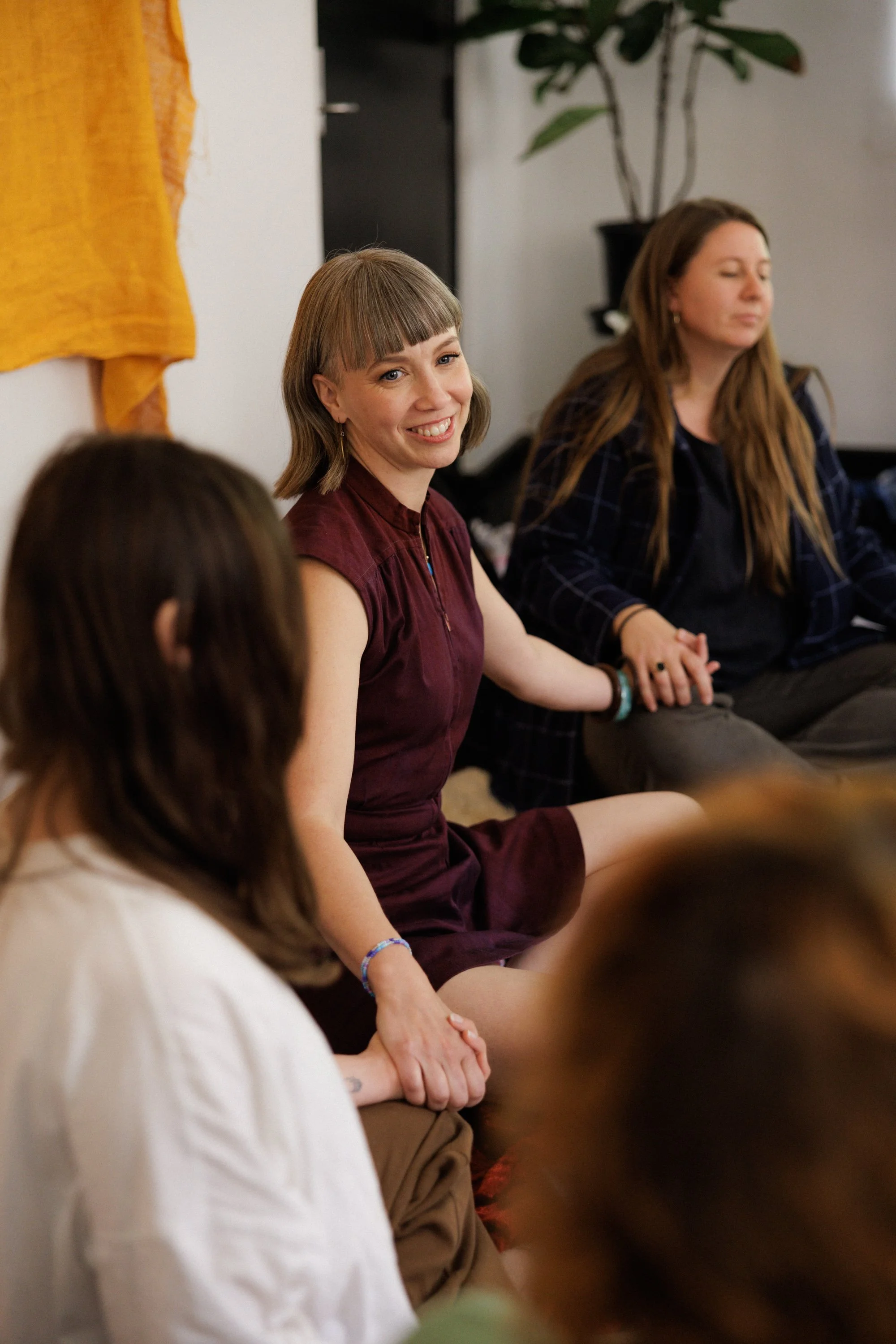 Image 7 of 9
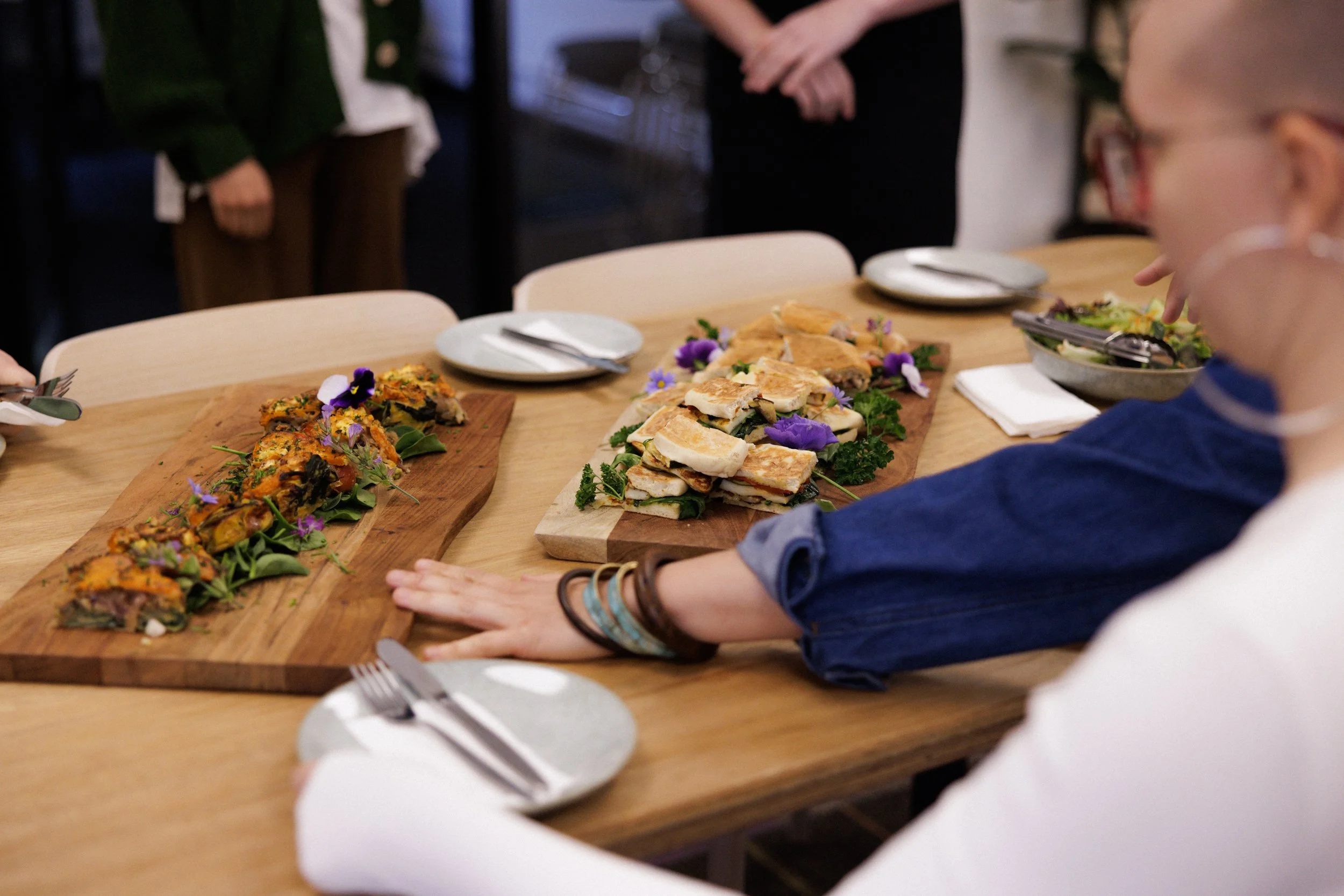 Image 8 of 9
 Image 9 of 9